Lake District Farmstead
Lake District Farmstead

With the backing of the clients, this project was at the furtest end of the spectrum in terms of being purist to traditional techiniques
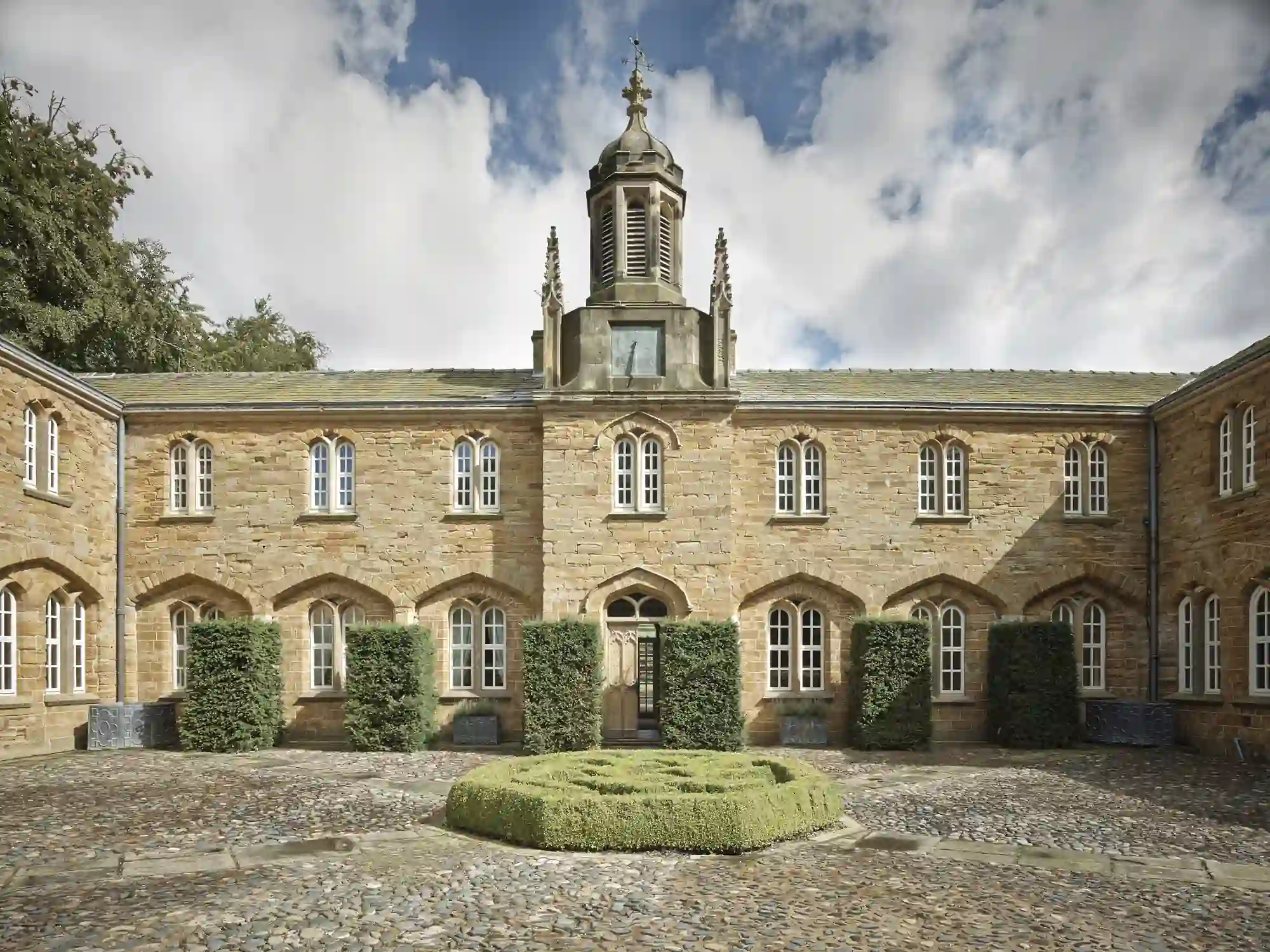
This Grade II listed Lakeland farmstead once formed part of a historic agricultural landscape, its 14th–17th century farmhouse standing as a quiet witness to centuries of rural life. After suffering a devastating fire and an unsympathetic restoration in the 1970s, the building had lost much of its original character. The new owners were determined to breathe life back into the farmhouse, honouring its origins and reinstating the authenticity it deserved. Set within a remote Cumbrian valley, surrounded by 1½ acres of stone‑walled gardens, ponds and a small kitchen garden, the restored cottage now sits comfortably within its remarkable landscape once again.
With the backing of the clients, this project was at the furtest end of the spectrum in terms of being purist to traditional techiniques
This Grade II listed Lakeland farmstead once formed part of a historic agricultural landscape, its 14th–17th century farmhouse standing as a quiet witness to centuries of rural life. After suffering a devastating fire and an unsympathetic restoration in the 1970s, the building had lost much of its original character. The new owners were determined to breathe life back into the farmhouse, honouring its origins and reinstating the authenticity it deserved. Set within a remote Cumbrian valley, surrounded by 1½ acres of stone‑walled gardens, ponds and a small kitchen garden, the restored cottage now sits comfortably within its remarkable landscape once again.
This Grade II listed Lakeland farmstead once formed part of a historic agricultural landscape, its 14th–17th century farmhouse standing as a quiet witness to centuries of rural life. After suffering a devastating fire and an unsympathetic restoration in the 1970s, the building had lost much of its original character. The new owners were determined to breathe life back into the farmhouse, honouring its origins and reinstating the authenticity it deserved. Set within a remote Cumbrian valley, surrounded by 1½ acres of stone‑walled gardens, ponds and a small kitchen garden, the restored cottage now sits comfortably within its remarkable landscape once again.
This Grade II listed Lakeland farmstead once formed part of a historic agricultural landscape, its 14th–17th century farmhouse standing as a quiet witness to centuries of rural life. After suffering a devastating fire and an unsympathetic restoration in the 1970s, the building had lost much of its original character. The new owners were determined to breathe life back into the farmhouse, honouring its origins and reinstating the authenticity it deserved. Set within a remote Cumbrian valley, surrounded by 1½ acres of stone‑walled gardens, ponds and a small kitchen garden, the restored cottage now sits comfortably within its remarkable landscape once again.
This Grade II listed Lakeland farmstead once formed part of a historic agricultural landscape, its 14th–17th century farmhouse standing as a quiet witness to centuries of rural life. After suffering a devastating fire and an unsympathetic restoration in the 1970s, the building had lost much of its original character. The new owners were determined to breathe life back into the farmhouse, honouring its origins and reinstating the authenticity it deserved. Set within a remote Cumbrian valley, surrounded by 1½ acres of stone‑walled gardens, ponds and a small kitchen garden, the restored cottage now sits comfortably within its remarkable landscape once again.
This Grade II listed Lakeland farmstead once formed part of a historic agricultural landscape, its 14th–17th century farmhouse standing as a quiet witness to centuries of rural life. After suffering a devastating fire and an unsympathetic restoration in the 1970s, the building had lost much of its original character. The new owners were determined to breathe life back into the farmhouse, honouring its origins and reinstating the authenticity it deserved. Set within a remote Cumbrian valley, surrounded by 1½ acres of stone‑walled gardens, ponds and a small kitchen garden, the restored cottage now sits comfortably within its remarkable landscape once again.
With the backing of the clients, this project was at the furtest end of the spectrum in terms of being purist to traditional techiniques
With the backing of the clients, this project was at the furtest end of the spectrum in terms of being purist to traditional techiniques
This Grade II listed Lakeland farmstead once formed part of a historic agricultural landscape, its 14th–17th century farmhouse standing as a quiet witness to centuries of rural life. After suffering a devastating fire and an unsympathetic restoration in the 1970s, the building had lost much of its original character. The new owners were determined to breathe life back into the farmhouse, honouring its origins and reinstating the authenticity it deserved. Set within a remote Cumbrian valley, surrounded by 1½ acres of stone‑walled gardens, ponds and a small kitchen garden, the restored cottage now sits comfortably within its remarkable landscape once again.
This Grade II listed Lakeland farmstead once formed part of a historic agricultural landscape, its 14th–17th century farmhouse standing as a quiet witness to centuries of rural life. After suffering a devastating fire and an unsympathetic restoration in the 1970s, the building had lost much of its original character. The new owners were determined to breathe life back into the farmhouse, honouring its origins and reinstating the authenticity it deserved. Set within a remote Cumbrian valley, surrounded by 1½ acres of stone‑walled gardens, ponds and a small kitchen garden, the restored cottage now sits comfortably within its remarkable landscape once again.
This Grade II listed Lakeland farmstead once formed part of a historic agricultural landscape, its 14th–17th century farmhouse standing as a quiet witness to centuries of rural life. After suffering a devastating fire and an unsympathetic restoration in the 1970s, the building had lost much of its original character. The new owners were determined to breathe life back into the farmhouse, honouring its origins and reinstating the authenticity it deserved. Set within a remote Cumbrian valley, surrounded by 1½ acres of stone‑walled gardens, ponds and a small kitchen garden, the restored cottage now sits comfortably within its remarkable landscape once again.
This project called for us to revive the farmhouse solely using traditional methods and hand‑tool craftsmanship, restoring the authenticity it deserved
The owners’ vision was clear, to restore the farmhouse to its former glory using traditional methods, not simply recreating the look of the past but embracing its true spirit. This commitment allowed us to immerse ourselves fully in historic craftsmanship. The entire project became a purist exercise in traditional joinery, no machinery, no glue, only hand tools andauthentic craftsmanship.
This project called for us to revive the farmhouse solely using traditional methods and hand‑tool craftsmanship, restoring the authenticity it deserved
The owners’ vision was clear, to restore the farmhouse to its former glory using traditional methods, not simply recreating the look of the past but embracing its true spirit. This commitment allowed us to immerse ourselves fully in historic craftsmanship. The entire project became a purist exercise in traditional joinery, no machinery, no glue, only hand tools andauthentic craftsmanship.

The owners’ vision was clear, to restore the farmhouse to its former glory using traditional methods, not simply recreating the look of the past but embracing its true spirit. This commitment allowed us to immerse ourselves fully in historic craftsmanship. The entire project became a purist exercise in traditional joinery, no machinery, no glue, only hand tools andauthentic craftsmanship.
The owners’ vision was clear, to restore the farmhouse to its former glory using traditional methods, not simply recreating the look of the past but embracing its true spirit. This commitment allowed us to immerse ourselves fully in historic craftsmanship. The entire project became a purist exercise in traditional joinery, no machinery, no glue, only hand tools andauthentic craftsmanship.
The owners’ vision was clear, to restore the farmhouse to its former glory using traditional methods, not simply recreating the look of the past but embracing its true spirit. This commitment allowed us to immerse ourselves fully in historic craftsmanship. The entire project became a purist exercise in traditional joinery, no machinery, no glue, only hand tools andauthentic craftsmanship.
The owners’ vision was clear, to restore the farmhouse to its former glory using traditional methods, not simply recreating the look of the past but embracing its true spirit. This commitment allowed us to immerse ourselves fully in historic craftsmanship. The entire project became a purist exercise in traditional joinery, no machinery, no glue, only hand tools andauthentic craftsmanship.
This project called for us to revive the farmhouse solely using traditional methods and hand‑tool craftsmanship, restoring the authenticity it deserved
This project called for us to revive the farmhouse solely using traditional methods and hand‑tool craftsmanship, restoring the authenticity it deserved
The owners’ vision was clear, to restore the farmhouse to its former glory using traditional methods, not simply recreating the look of the past but embracing its true spirit. This commitment allowed us to immerse ourselves fully in historic craftsmanship. The entire project became a purist exercise in traditional joinery, no machinery, no glue, only hand tools andauthentic craftsmanship.
The owners’ vision was clear, to restore the farmhouse to its former glory using traditional methods, not simply recreating the look of the past but embracing its true spirit. This commitment allowed us to immerse ourselves fully in historic craftsmanship. The entire project became a purist exercise in traditional joinery, no machinery, no glue, only hand tools andauthentic craftsmanship.
The owners’ vision was clear, to restore the farmhouse to its former glory using traditional methods, not simply recreating the look of the past but embracing its true spirit. This commitment allowed us to immerse ourselves fully in historic craftsmanship. The entire project became a purist exercise in traditional joinery, no machinery, no glue, only hand tools andauthentic craftsmanship.
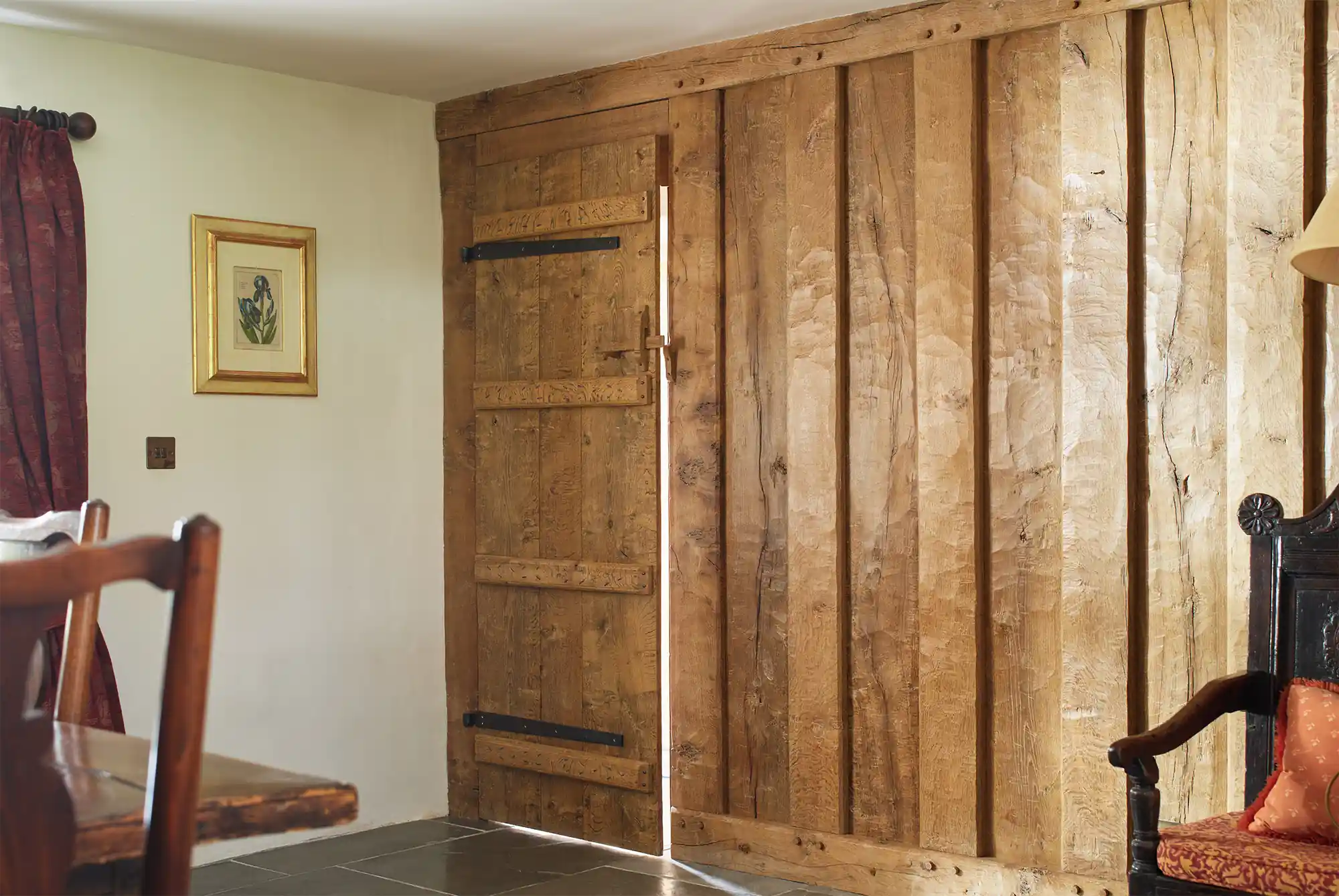
A traditional plank and muntin screen at the heart of the restoration reconnected the farmhouse with its 16th century origins
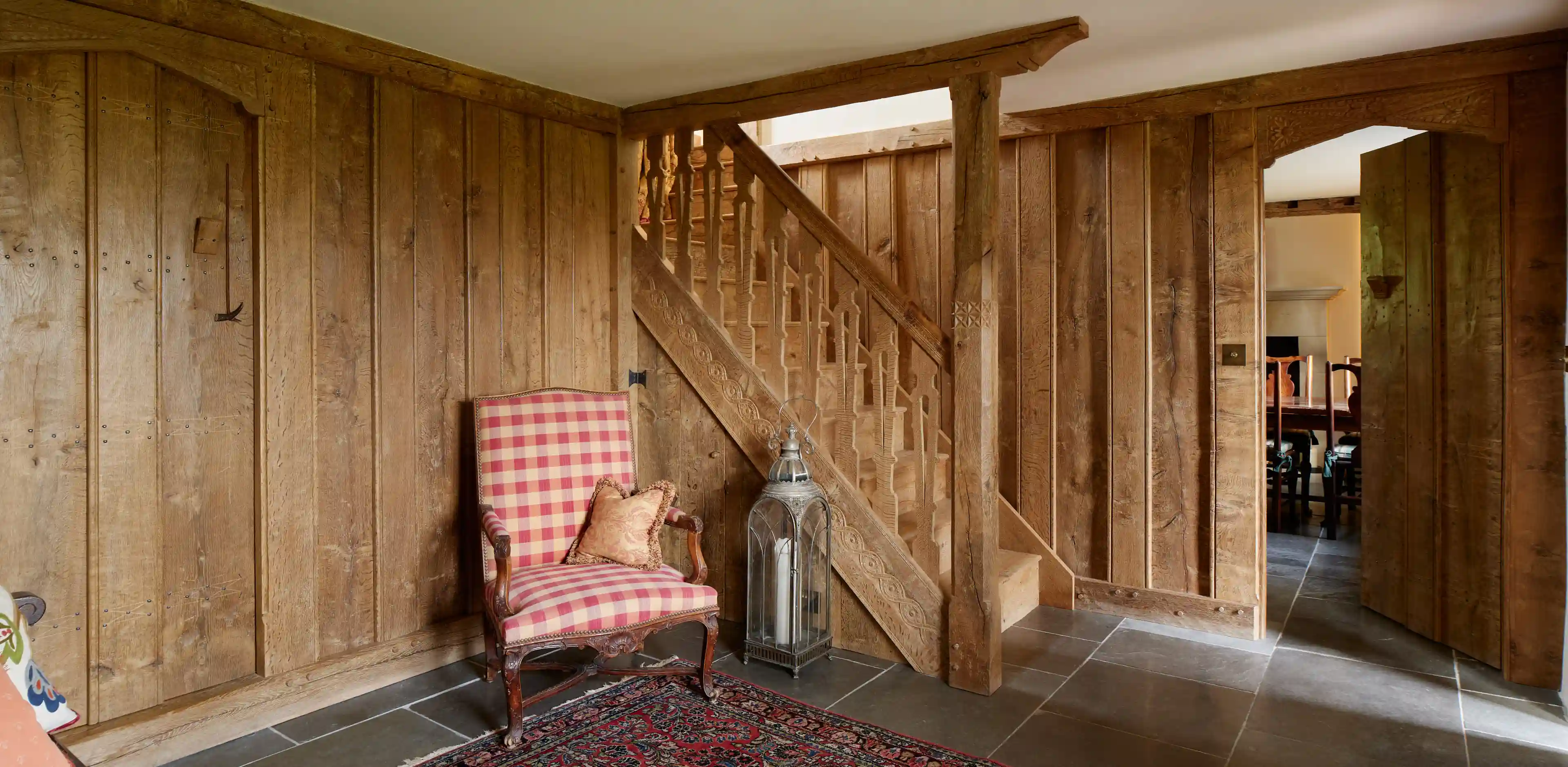
The centrepiece of the project was a traditional plank‑and‑muntin screen; a timber partition wall commonly used in 16th‑century homes to separate cross‑passages from service areas. Every element was made entirely by hand: adze‑worked surfaces, hand‑sawn boards, moulding planes shaping each detail. Even the pegs were carved by hand with a drawknife.
Two screens, visible from three rooms and divided by a staircase, also discreetly house the downstairs WC and a mechanical & electrical cupboard. By embracing the authentic construction, the screens bring coherence to the entire wing of the house, creating flow while naturally partitioning the rooms.
A traditional plank and muntin screen at the heart of the restoration reconnected the farmhouse with its 16th century origins
The centrepiece of the project was a traditional plank‑and‑muntin screen; a timber partition wall commonly used in 16th‑century homes to separate cross‑passages from service areas. Every element was made entirely by hand: adze‑worked surfaces, hand‑sawn boards, moulding planes shaping each detail. Even the pegs were carved by hand with a drawknife.
Two screens, visible from three rooms and divided by a staircase, also discreetly house the downstairs WC and a mechanical & electrical cupboard. By embracing the authentic construction, the screens bring coherence to the entire wing of the house, creating flow while naturally partitioning the rooms.

The centrepiece of the project was a traditional plank‑and‑muntin screen; a timber partition wall commonly used in 16th‑century homes to separate cross‑passages from service areas. Every element was made entirely by hand: adze‑worked surfaces, hand‑sawn boards, moulding planes shaping each detail. Even the pegs were carved by hand with a drawknife.
Two screens, visible from three rooms and divided by a staircase, also discreetly house the downstairs WC and a mechanical & electrical cupboard. By embracing the authentic construction, the screens bring coherence to the entire wing of the house, creating flow while naturally partitioning the rooms.
The centrepiece of the project was a traditional plank‑and‑muntin screen; a timber partition wall commonly used in 16th‑century homes to separate cross‑passages from service areas. Every element was made entirely by hand: adze‑worked surfaces, hand‑sawn boards, moulding planes shaping each detail. Even the pegs were carved by hand with a drawknife.
Two screens, visible from three rooms and divided by a staircase, also discreetly house the downstairs WC and a mechanical & electrical cupboard. By embracing the authentic construction, the screens bring coherence to the entire wing of the house, creating flow while naturally partitioning the rooms.
The centrepiece of the project was a traditional plank‑and‑muntin screen; a timber partition wall commonly used in 16th‑century homes to separate cross‑passages from service areas. Every element was made entirely by hand: adze‑worked surfaces, hand‑sawn boards, moulding planes shaping each detail. Even the pegs were carved by hand with a drawknife.
Two screens, visible from three rooms and divided by a staircase, also discreetly house the downstairs WC and a mechanical & electrical cupboard. By embracing the authentic construction, the screens bring coherence to the entire wing of the house, creating flow while naturally partitioning the rooms.
The centrepiece of the project was a traditional plank‑and‑muntin screen; a timber partition wall commonly used in 16th‑century homes to separate cross‑passages from service areas. Every element was made entirely by hand: adze‑worked surfaces, hand‑sawn boards, moulding planes shaping each detail. Even the pegs were carved by hand with a drawknife.
Two screens, visible from three rooms and divided by a staircase, also discreetly house the downstairs WC and a mechanical & electrical cupboard. By embracing the authentic construction, the screens bring coherence to the entire wing of the house, creating flow while naturally partitioning the rooms.
A traditional plank and muntin screen at the heart of the restoration reconnected the farmhouse with its 16th century origins
A traditional plank and muntin screen at the heart of the restoration reconnected the farmhouse with its 16th century origins
The centrepiece of the project was a traditional plank‑and‑muntin screen; a timber partition wall commonly used in 16th‑century homes to separate cross‑passages from service areas. Every element was made entirely by hand: adze‑worked surfaces, hand‑sawn boards, moulding planes shaping each detail. Even the pegs were carved by hand with a drawknife.
Two screens, visible from three rooms and divided by a staircase, also discreetly house the downstairs WC and a mechanical & electrical cupboard. By embracing the authentic construction, the screens bring coherence to the entire wing of the house, creating flow while naturally partitioning the rooms.
The centrepiece of the project was a traditional plank‑and‑muntin screen; a timber partition wall commonly used in 16th‑century homes to separate cross‑passages from service areas. Every element was made entirely by hand: adze‑worked surfaces, hand‑sawn boards, moulding planes shaping each detail. Even the pegs were carved by hand with a drawknife.
Two screens, visible from three rooms and divided by a staircase, also discreetly house the downstairs WC and a mechanical & electrical cupboard. By embracing the authentic construction, the screens bring coherence to the entire wing of the house, creating flow while naturally partitioning the rooms.
The centrepiece of the project was a traditional plank‑and‑muntin screen; a timber partition wall commonly used in 16th‑century homes to separate cross‑passages from service areas. Every element was made entirely by hand: adze‑worked surfaces, hand‑sawn boards, moulding planes shaping each detail. Even the pegs were carved by hand with a drawknife.
Two screens, visible from three rooms and divided by a staircase, also discreetly house the downstairs WC and a mechanical & electrical cupboard. By embracing the authentic construction, the screens bring coherence to the entire wing of the house, creating flow while naturally partitioning the rooms.

Architectural joinery inspired by local history and regional craftsmanship which brings unity to the farmstead
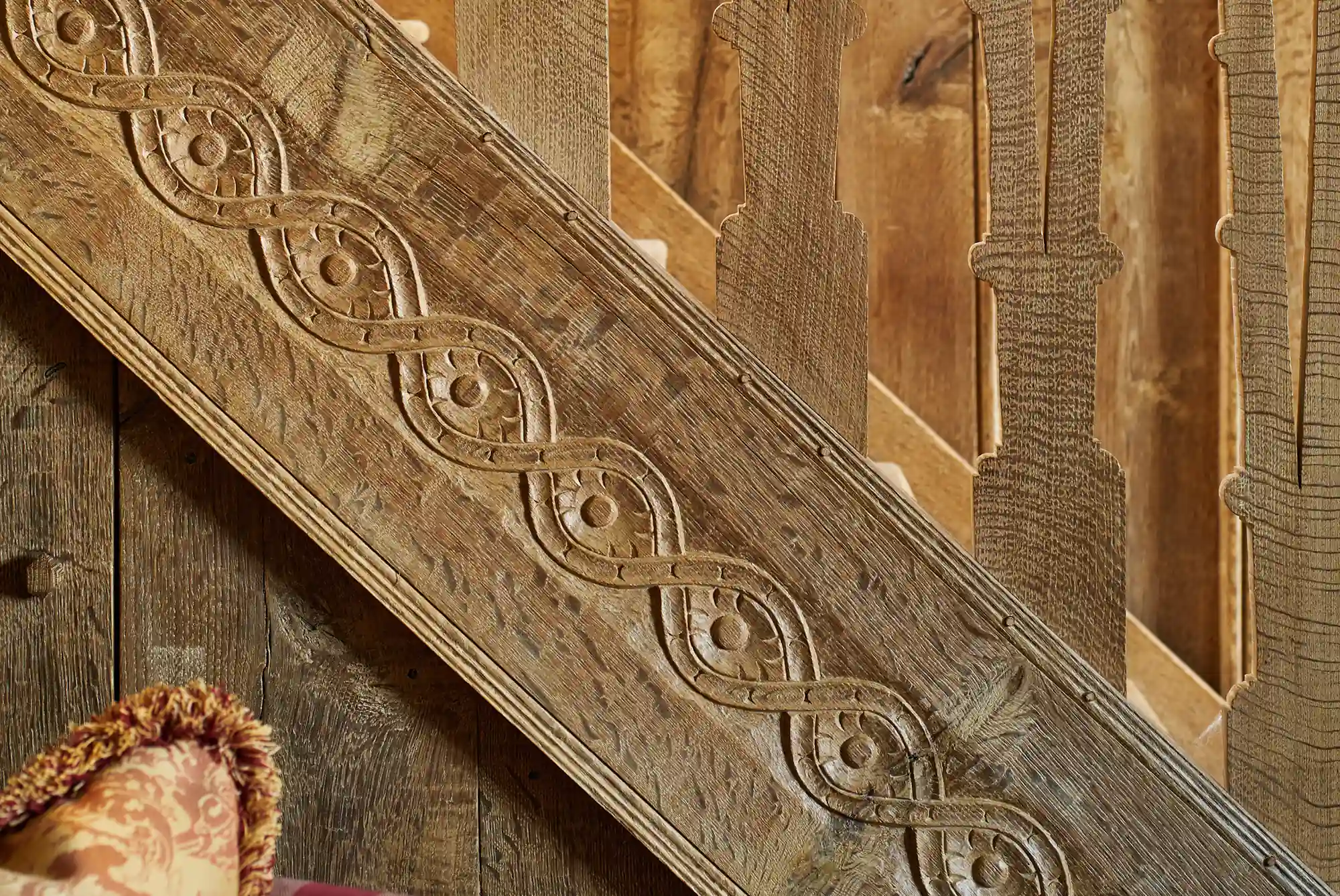
Beyond the screens, our work included two external doors, two staircases and a suite of internal doors, all united by the language of the screen and its carved details. The designs drew inspiration from historic examples studied in person and from reference texts, incorporating carvings traditional to the Lake District and motifs found in other local houses. In doing so, the joinery not only restored the farmhouse but reconnected it with its landscape and heritage.
Architectural joinery inspired by local history and regional craftsmanship which brings unity to the farmstead
Beyond the screens, our work included two external doors, two staircases and a suite of internal doors, all united by the language of the screen and its carved details. The designs drew inspiration from historic examples studied in person and from reference texts, incorporating carvings traditional to the Lake District and motifs found in other local houses. In doing so, the joinery not only restored the farmhouse but reconnected it with its landscape and heritage.
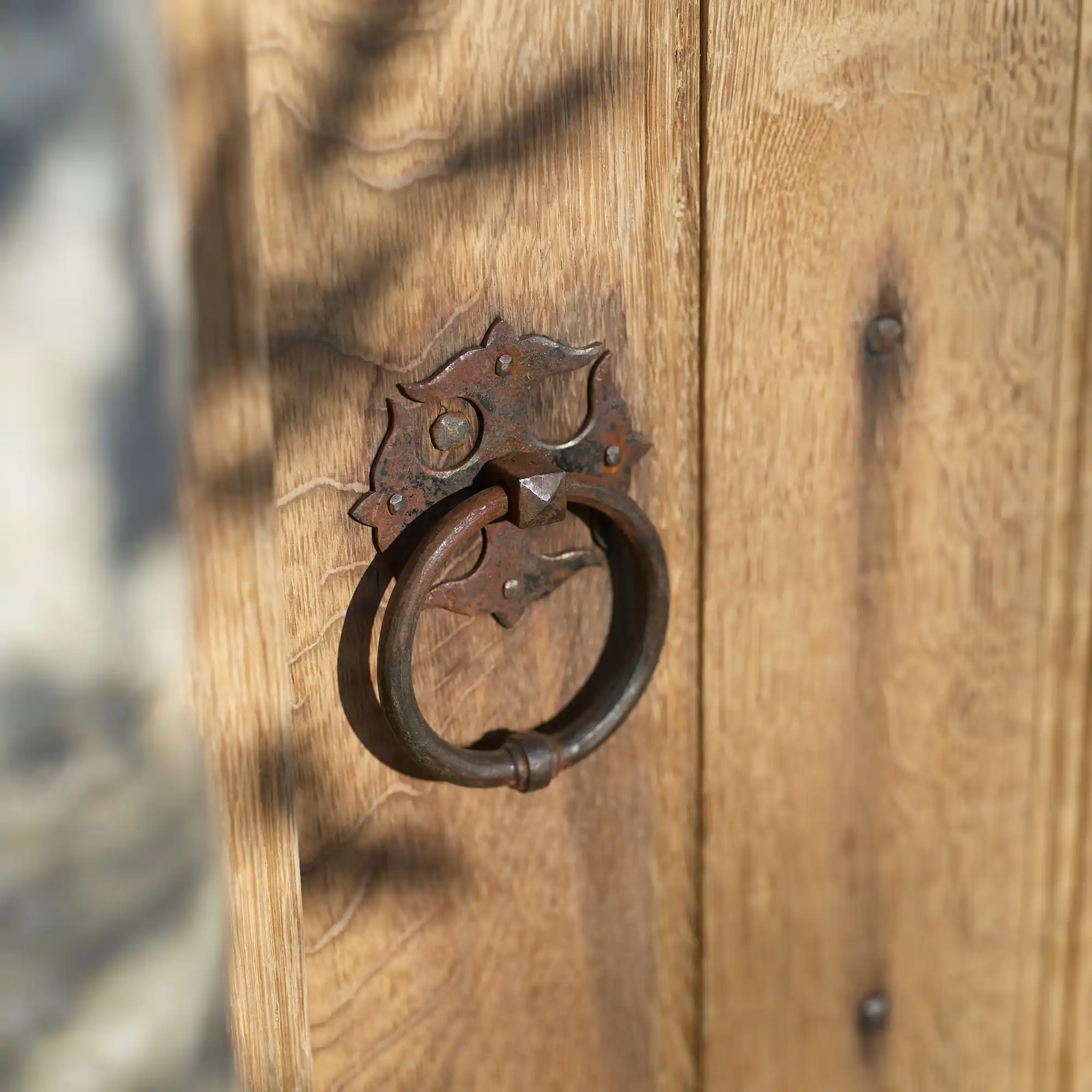
Beyond the screens, our work included two external doors, two staircases and a suite of internal doors, all united by the language of the screen and its carved details. The designs drew inspiration from historic examples studied in person and from reference texts, incorporating carvings traditional to the Lake District and motifs found in other local houses. In doing so, the joinery not only restored the farmhouse but reconnected it with its landscape and heritage.
Beyond the screens, our work included two external doors, two staircases and a suite of internal doors, all united by the language of the screen and its carved details. The designs drew inspiration from historic examples studied in person and from reference texts, incorporating carvings traditional to the Lake District and motifs found in other local houses. In doing so, the joinery not only restored the farmhouse but reconnected it with its landscape and heritage.
Beyond the screens, our work included two external doors, two staircases and a suite of internal doors, all united by the language of the screen and its carved details. The designs drew inspiration from historic examples studied in person and from reference texts, incorporating carvings traditional to the Lake District and motifs found in other local houses. In doing so, the joinery not only restored the farmhouse but reconnected it with its landscape and heritage.
Beyond the screens, our work included two external doors, two staircases and a suite of internal doors, all united by the language of the screen and its carved details. The designs drew inspiration from historic examples studied in person and from reference texts, incorporating carvings traditional to the Lake District and motifs found in other local houses. In doing so, the joinery not only restored the farmhouse but reconnected it with its landscape and heritage.

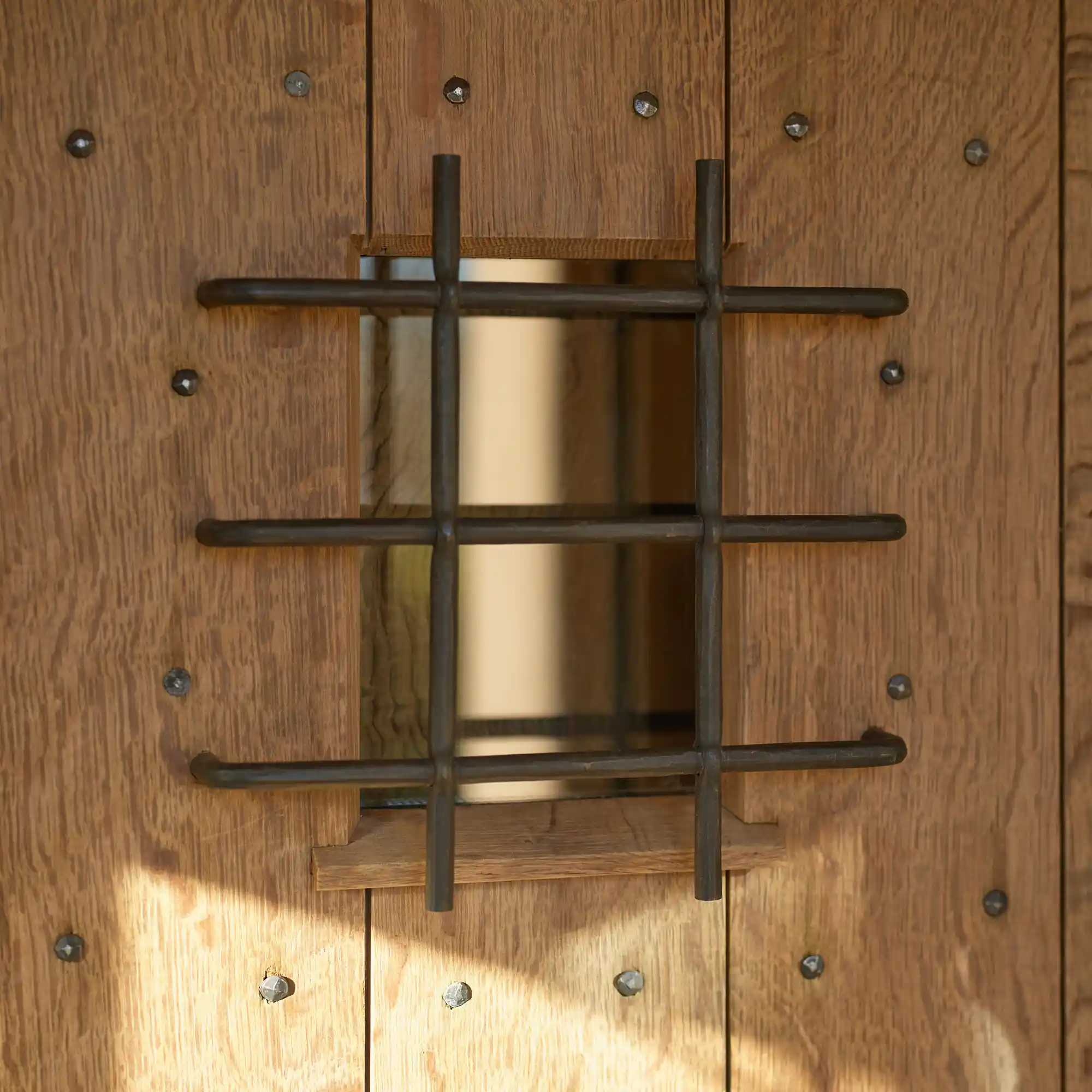

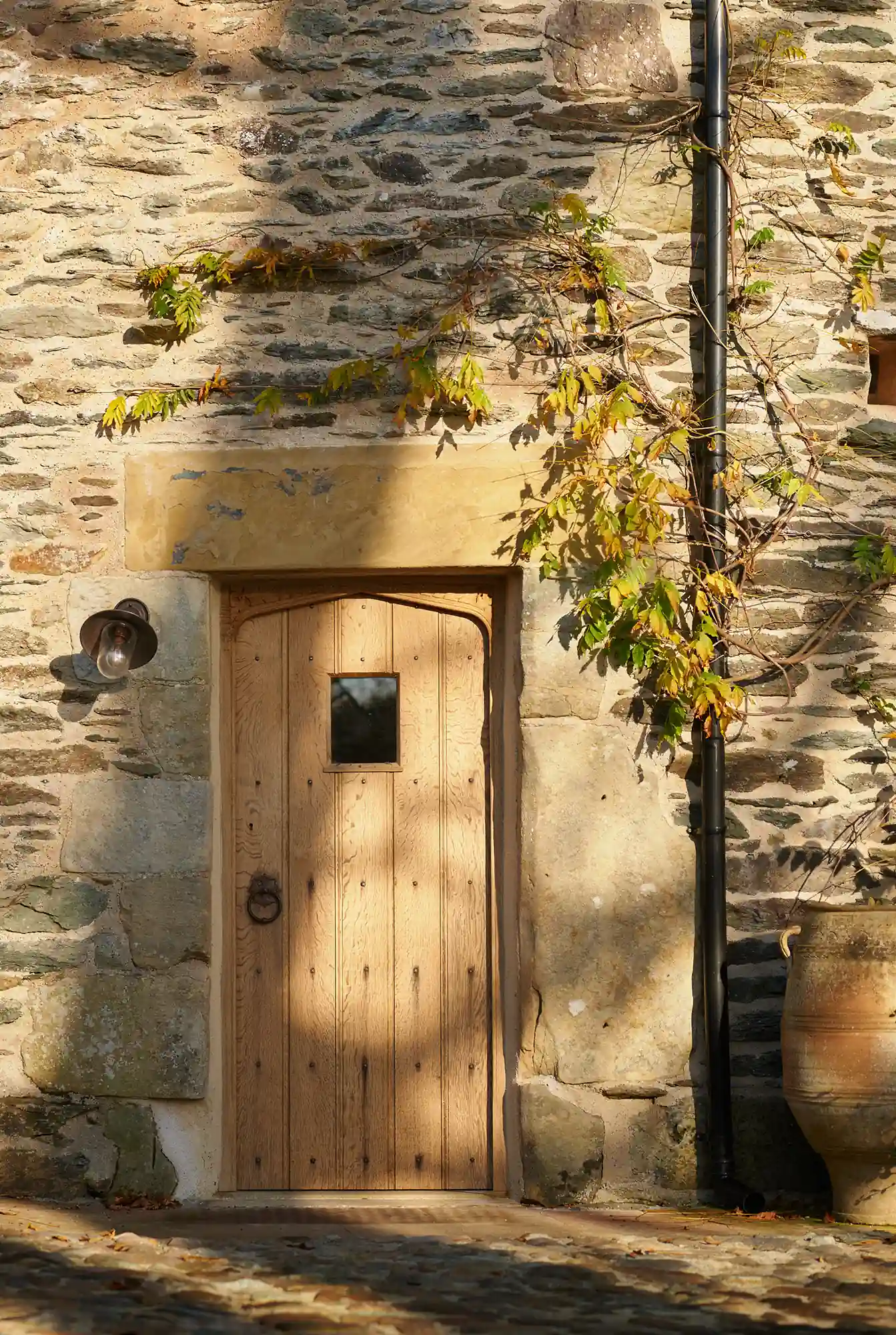
Architectural joinery inspired by local history and regional craftsmanship which brings unity to the farmstead
Architectural joinery inspired by local history and regional craftsmanship which brings unity to the farmstead
Beyond the screens, our work included two external doors, two staircases and a suite of internal doors, all united by the language of the screen and its carved details. The designs drew inspiration from historic examples studied in person and from reference texts, incorporating carvings traditional to the Lake District and motifs found in other local houses. In doing so, the joinery not only restored the farmhouse but reconnected it with its landscape and heritage.
Beyond the screens, our work included two external doors, two staircases and a suite of internal doors, all united by the language of the screen and its carved details. The designs drew inspiration from historic examples studied in person and from reference texts, incorporating carvings traditional to the Lake District and motifs found in other local houses. In doing so, the joinery not only restored the farmhouse but reconnected it with its landscape and heritage.
Beyond the screens, our work included two external doors, two staircases and a suite of internal doors, all united by the language of the screen and its carved details. The designs drew inspiration from historic examples studied in person and from reference texts, incorporating carvings traditional to the Lake District and motifs found in other local houses. In doing so, the joinery not only restored the farmhouse but reconnected it with its landscape and heritage.
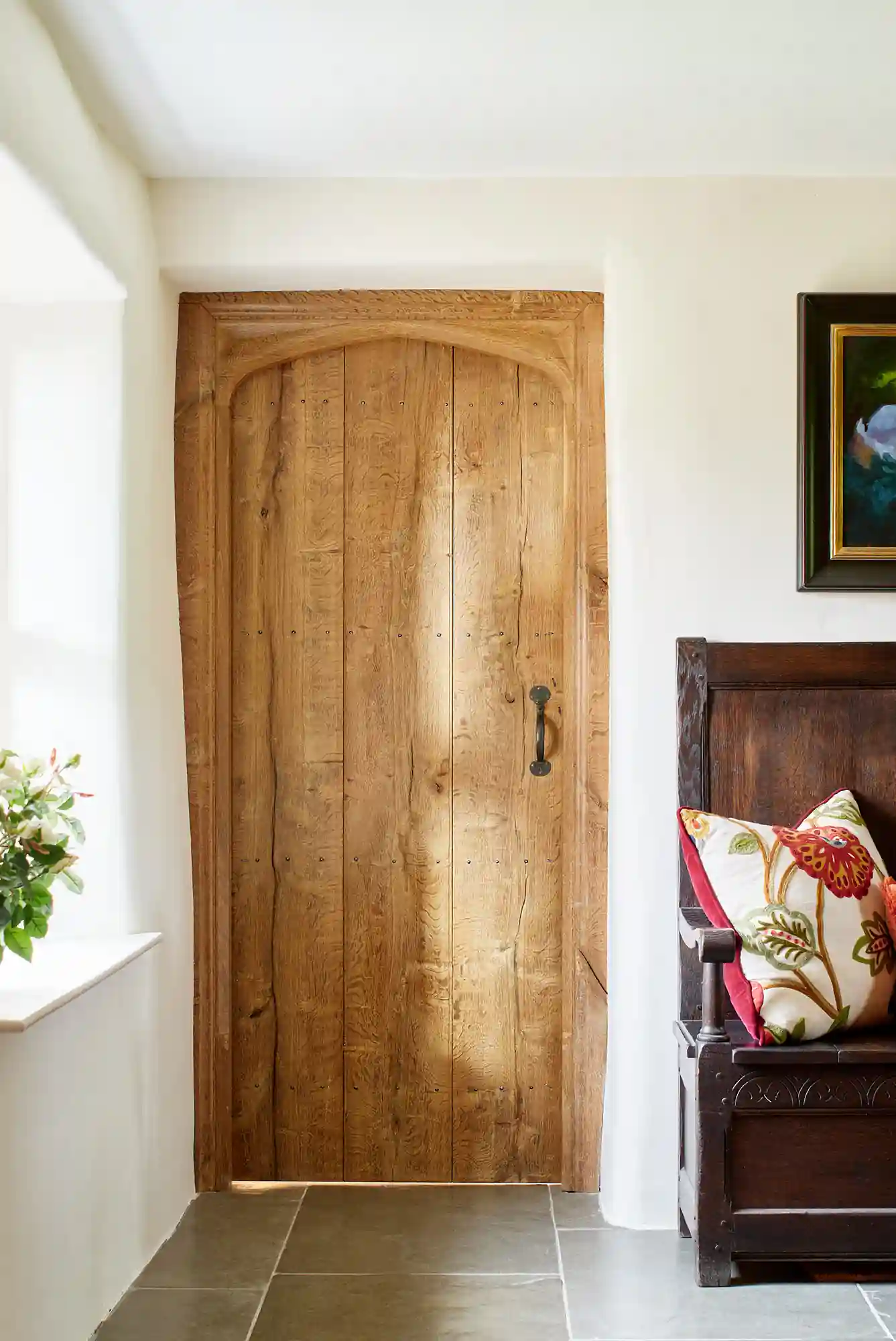
Traditional methods and knowledge of historic practices guided every decision, from the smallest threshold detail to the rhythm of the hand worked timber
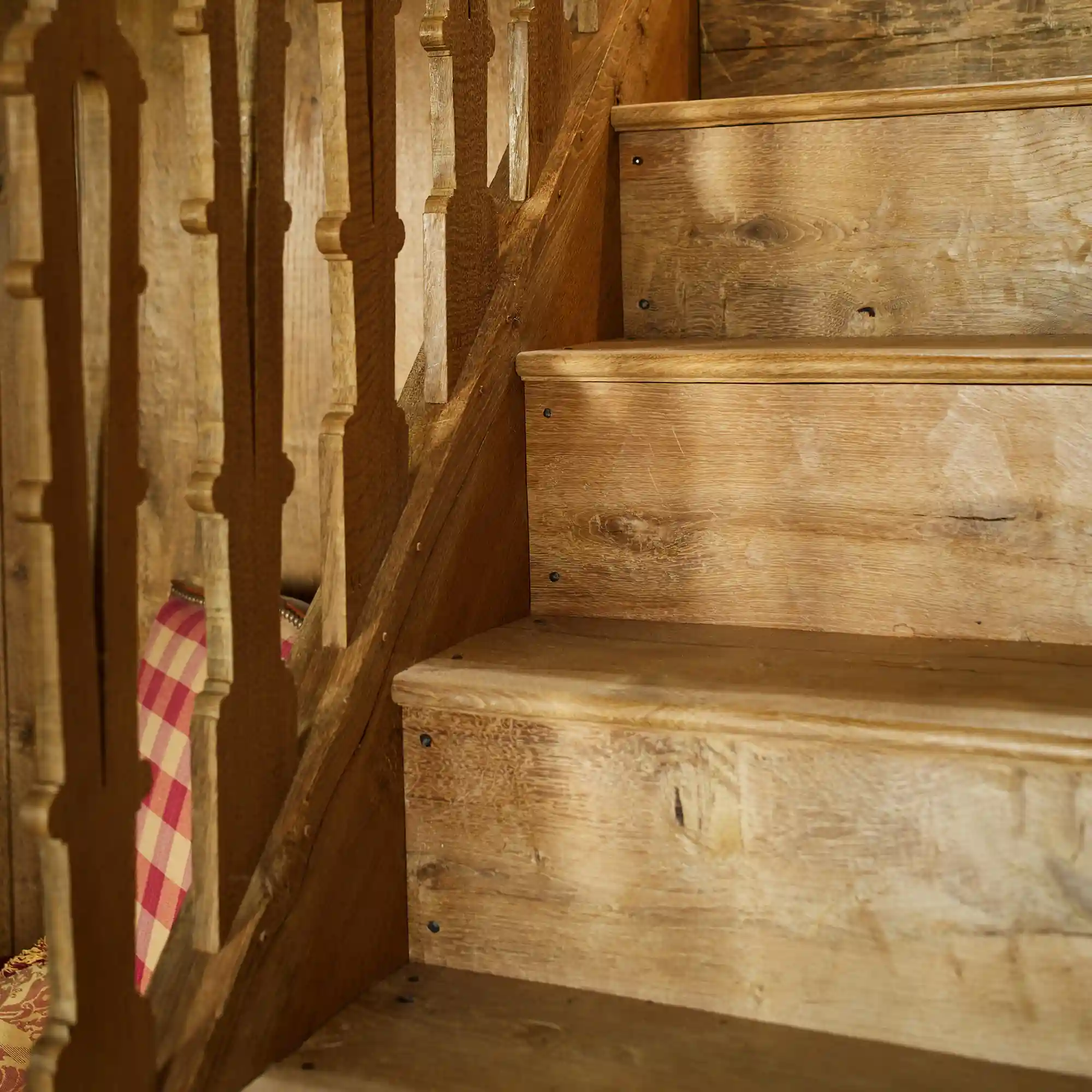
The design was complex, but building it authentically allowed us to remain true to the farmhouse’s history. Keeping historically accurate details, such as the stepped threshold into the downstairs WC rather than lowering the door to the floor, it’s only a small detail, but it gives the space a genuinely historic feel.
To ensure the new joinery elements sat comfortably within the farmstead and appeared to be part of the fabric of the building timber choice was critical. Quarter sawn oak was chosen for its character, with knots, wobbles and natural irregularities encouraged. These features echo the worn, time softened surfaces of a structure that had always been there.
.
Traditional methods and knowledge of historic practices guided every decision, from the smallest threshold detail to the rhythm of the hand worked timber
The design was complex, but building it authentically allowed us to remain true to the farmhouse’s history. Keeping historically accurate details, such as the stepped threshold into the downstairs WC rather than lowering the door to the floor, it’s only a small detail, but it gives the space a genuinely historic feel.
To ensure the new joinery elements sat comfortably within the farmstead and appeared to be part of the fabric of the building timber choice was critical. Quarter sawn oak was chosen for its character, with knots, wobbles and natural irregularities encouraged. These features echo the worn, time softened surfaces of a structure that had always been there.
.

The design was complex, but building it authentically allowed us to remain true to the farmhouse’s history. Keeping historically accurate details, such as the stepped threshold into the downstairs WC rather than lowering the door to the floor, it’s only a small detail, but it gives the space a genuinely historic feel.
To ensure the new joinery elements sat comfortably within the farmstead and appeared to be part of the fabric of the building timber choice was critical. Quarter sawn oak was chosen for its character, with knots, wobbles and natural irregularities encouraged. These features echo the worn, time softened surfaces of a structure that had always been there.
.
The design was complex, but building it authentically allowed us to remain true to the farmhouse’s history. Keeping historically accurate details, such as the stepped threshold into the downstairs WC rather than lowering the door to the floor, it’s only a small detail, but it gives the space a genuinely historic feel.
To ensure the new joinery elements sat comfortably within the farmstead and appeared to be part of the fabric of the building timber choice was critical. Quarter sawn oak was chosen for its character, with knots, wobbles and natural irregularities encouraged. These features echo the worn, time softened surfaces of a structure that had always been there.
.
The design was complex, but building it authentically allowed us to remain true to the farmhouse’s history. Keeping historically accurate details, such as the stepped threshold into the downstairs WC rather than lowering the door to the floor, it’s only a small detail, but it gives the space a genuinely historic feel.
To ensure the new joinery elements sat comfortably within the farmstead and appeared to be part of the fabric of the building timber choice was critical. Quarter sawn oak was chosen for its character, with knots, wobbles and natural irregularities encouraged. These features echo the worn, time softened surfaces of a structure that had always been there.
.
The design was complex, but building it authentically allowed us to remain true to the farmhouse’s history. Keeping historically accurate details, such as the stepped threshold into the downstairs WC rather than lowering the door to the floor, it’s only a small detail, but it gives the space a genuinely historic feel.
To ensure the new joinery elements sat comfortably within the farmstead and appeared to be part of the fabric of the building timber choice was critical. Quarter sawn oak was chosen for its character, with knots, wobbles and natural irregularities encouraged. These features echo the worn, time softened surfaces of a structure that had always been there.
.


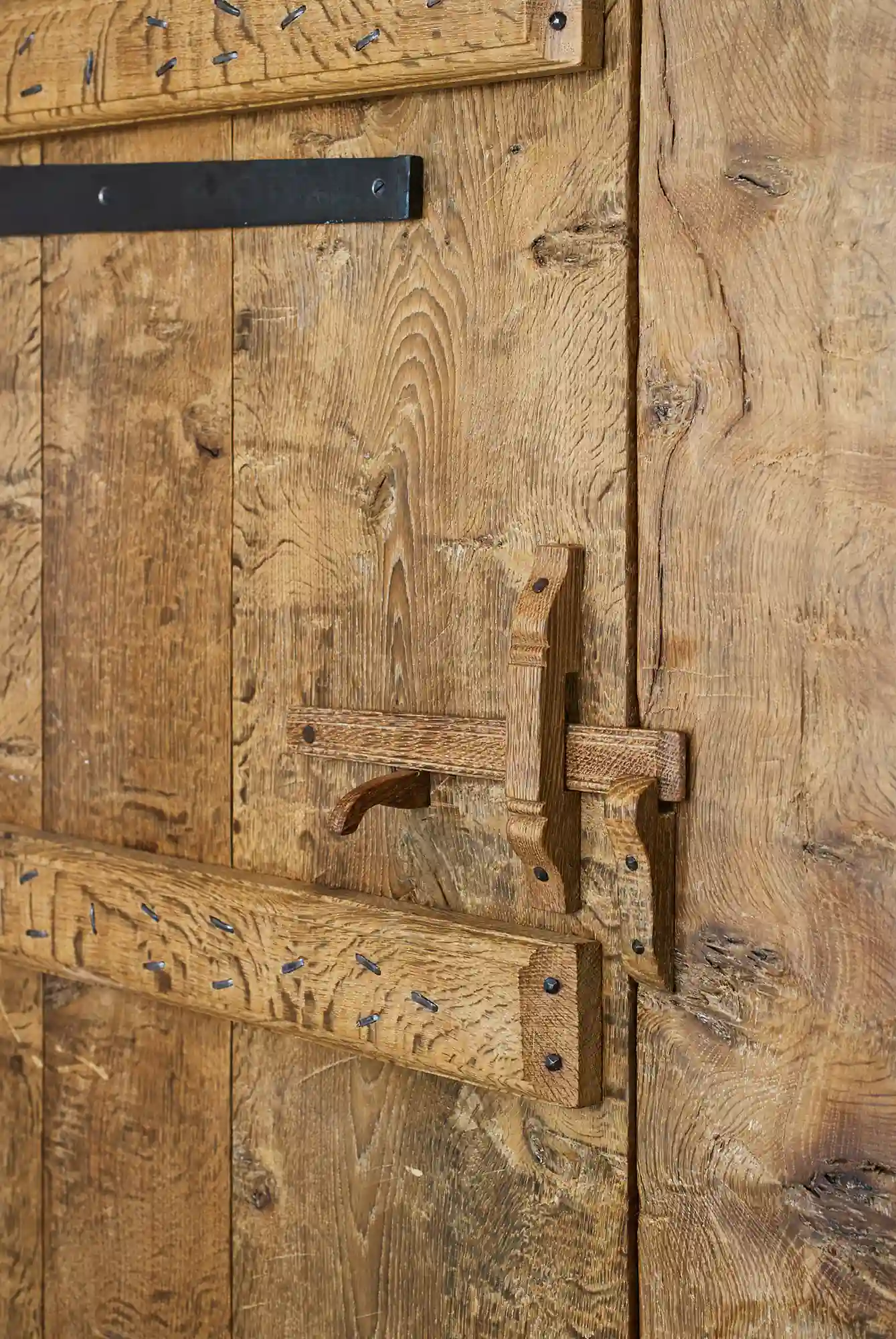
Traditional methods and knowledge of historic practices guided every decision, from the smallest threshold detail to the rhythm of the hand worked timber
Traditional methods and knowledge of historic practices guided every decision, from the smallest threshold detail to the rhythm of the hand worked timber
The design was complex, but building it authentically allowed us to remain true to the farmhouse’s history. Keeping historically accurate details, such as the stepped threshold into the downstairs WC rather than lowering the door to the floor, it’s only a small detail, but it gives the space a genuinely historic feel.
To ensure the new joinery elements sat comfortably within the farmstead and appeared to be part of the fabric of the building timber choice was critical. Quarter sawn oak was chosen for its character, with knots, wobbles and natural irregularities encouraged. These features echo the worn, time softened surfaces of a structure that had always been there.
.
The design was complex, but building it authentically allowed us to remain true to the farmhouse’s history. Keeping historically accurate details, such as the stepped threshold into the downstairs WC rather than lowering the door to the floor, it’s only a small detail, but it gives the space a genuinely historic feel.
To ensure the new joinery elements sat comfortably within the farmstead and appeared to be part of the fabric of the building timber choice was critical. Quarter sawn oak was chosen for its character, with knots, wobbles and natural irregularities encouraged. These features echo the worn, time softened surfaces of a structure that had always been there.
.
The design was complex, but building it authentically allowed us to remain true to the farmhouse’s history. Keeping historically accurate details, such as the stepped threshold into the downstairs WC rather than lowering the door to the floor, it’s only a small detail, but it gives the space a genuinely historic feel.
To ensure the new joinery elements sat comfortably within the farmstead and appeared to be part of the fabric of the building timber choice was critical. Quarter sawn oak was chosen for its character, with knots, wobbles and natural irregularities encouraged. These features echo the worn, time softened surfaces of a structure that had always been there.
.